


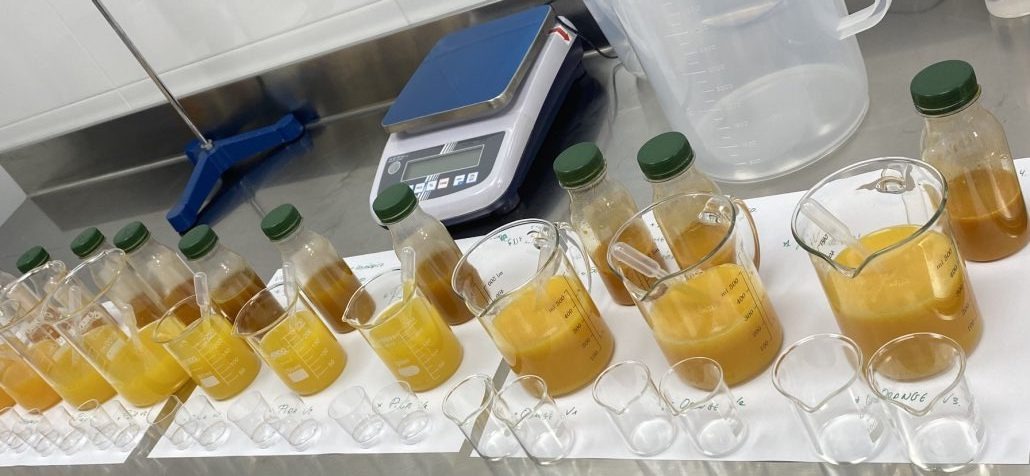
30 Nov The 7 Most Common Mistakes When Formulating Beverages with Juices and Concentrates (and How to Avoid Them)
Formulating a beverage seems easy on paper: water, juice, acid, sweetener, mix… done.
In reality ( especially in industrial B2B ) things go wrong fast: unstable colors, unexpected turbidity, sediments, oxidation, pH drift, off-flavors, or products that don’t survive pasteurization.
Here are the 7 mistakes I see most often in beverage factories and R&D departments around the world and how to prevent them from the start. A beverage formula is only as stable as the science behind it.
These seven mistakes are responsible for the majority of beverage failures: instability, oxidation, off-colors, sediments, and poor sensory performance.
By understanding and controlling these variables, manufacturers and R&D teams can produce clean, stable, predictable beverages, whether using NFC juices, concentrates, purees, or blends.
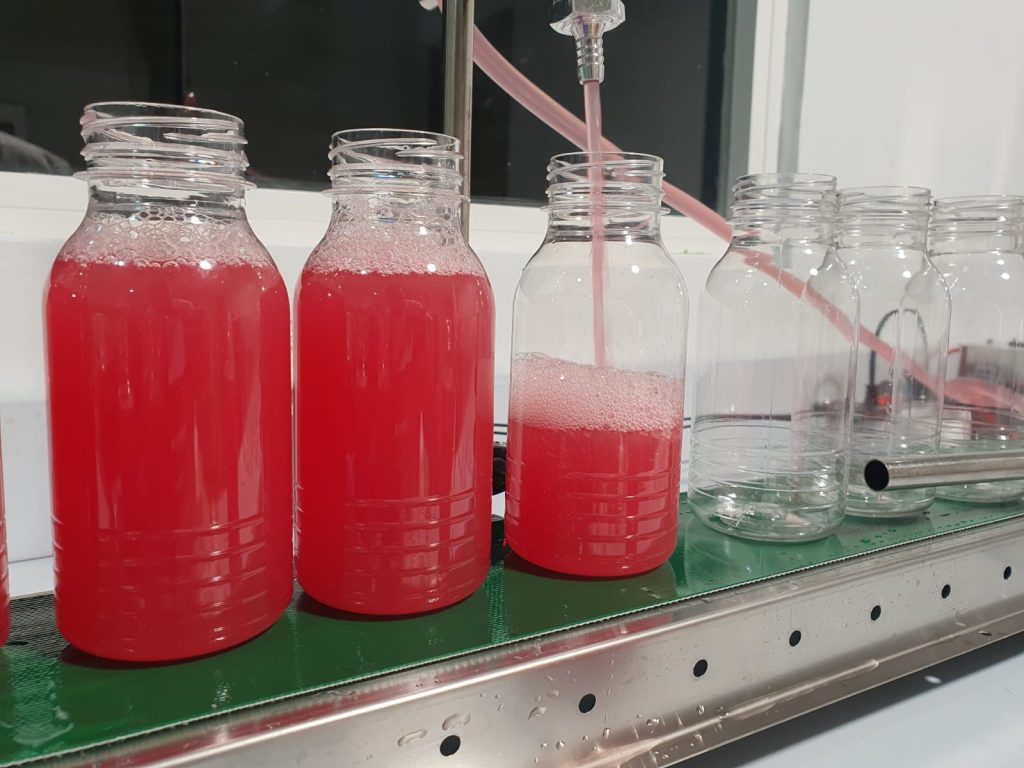
Not Controlling the Final pH of the Beverage
pH is one of the most decisive parameters in beverage formulation. It affects:
Microbiological stability
Color intensity (especially for pomegranate, aronia, berries)
Final taste profile
Pasteurization needs
Shelf life
Rule: Set a target pH range (e.g., 2.8–3.2 for functional drinks) and adjust acidity only at the end of the batch.
Choosing the Wrong Concentrate for the Matrix
This happens constantly. Same Brix, completely different results.
Typical problems:
Using tomato 28–30 °Bx for clear drinks → turbidity.
Using carrot or aronia with coarse particles → grainy texture.
Using pomegranate 65 °Bx with high punicalagin in highly acidic beverages → extreme astringency.
Solution: Evaluate not only °Brix, but also turbidity, Lab* color, pH, fructose/glucose ratio, viscosity, fiber content, and thermal stability.
Adding Vitamin C Without Considering Oxidation
Ascorbic acid is a great antioxidant… until it oxidizes itself.
When it does, it creates:
Darkening of color
“Old” or “metallic” flavor
Loss of freshness
Degradation rings inside transparent bottles
Best practice:
Add vitamin C at the end, in cold conditions
Minimize dissolved oxygen
Use packaging with low oxygen permeability
Avoid over-pasteurization
Adjusting Color Before Thermal Treatment
Heat changes color dramatically — especially in tomato, pomegranate, carrot, aronia, and beetroot.
If you adjust color before pasteurization, the final product will often look:
Dull
Brownish
Less vibrant
Too dark
Tip: Always test color after a thermal simulation and adjust once you know the final tone.
Using the Wrong Type of Acid
Not all acids behave the same way:
Citric acid: strong, clean acidity, but increases astringency in pomegranate.
Malic acid: rounder, ideal for apple- and grape-based drinks.
Tartaric acid: very stable but sharp.
Lactic acid: softens the profile, but less common in 100% natural juice drinks.
General rule: Start with the acid naturally present in the fruit base of the formula.
Ignoring Turbidity and Final Filtration
A very common problem in beverage plants:
Unexpected sediment
Haze in clear beverages
Floating particles
Ring formation at the top or bottom of the bottle
This is especially common with tomato, carrot, mango, pineapple, and fiber-rich fruits.
How to avoid it:
Define from the start: clear or cloudy beverage
Choose proper sieves (0.2–0.5 mm depending on the fruit)
Perform stability tests in cold and hot conditions
Consider light centrifugation for RTD applications
Incorrect Sweetness Adjustment Due to pH Effects
Sweeteners don’t taste the same at all pH levels.
Examples:
Sucralose tastes less sweet at pH < 3.2
Fructose changes its aromatic note depending on acidity
High-acid systems mute natural fruit sweetness
Recommendation:
Adjust sweetness after the final pH is set, not before.

Sorry, the comment form is closed at this time.