




03 Feb FC Lemon Juice with Preservatives: Stability, Safety, and Versatility for Professional Applications
Maintaining fresh citrus flavor, natural acidity, and visual appeal in high-volume food and beverage production presents significant technical challenges. Factors such as enzymatic browning, microbiological spoilage, and oxidation can compromise product quality during storage and transport.
Reconstituted From Concentrate (FC) lemon juice combined with targeted preservation systems provides industrial manufacturers with a standardized, microbiologically safe, and cost-effective ingredient solution.
The Role of Preservatives in Citrus Juice Stability
Lemon juice is naturally acidic (typically pH 2.0–2.6), which provides inherent antimicrobial properties against many pathogen strains. However, acid-tolerant spoilage organisms—such as yeasts, molds, and lactic acid bacteria—can still proliferate unless adequate preservation or thermal processing is applied.
In industrial applications where thermal pasteurization alone is insufficient for extended ambient storage, chemical preservation plays a crucial role:
1. Sulfur Dioxide (SO2/ Metabisulfites – E220–E224)
-
Antioxidant Action: Inhibits both enzymatic (polyphenol oxidase) and non-enzymatic (Maillard reaction) browning, ensuring long-term color retention.
-
Antimicrobial Control: Prevents yeast fermentation and bacterial growth, maintaining chemical composition throughout the supply chain.
-
Target Applications: Widely utilized in sauces, dressings, and beverage bases where visual stability is paramount.
2. Sorbates and Benzoates (E202 / E211)
-
Synergistic Preservation: Frequently combined with natural acidity to target yeast and mold development in non-sulfited formulations.
-
Application Fit: Preferred for clean-label strategies or markets with strict SO2 regulatory limits.
Technical Advantages of Preserved FC Lemon Juice for R&D Formulator
Utilizing preserved FC lemon juice in industrial formulations offers key operational advantages:
-
Consistent Acid Profile: Standardized citric acid content ($\% \text{ w/w}$) eliminates natural crop-to-crop acidity fluctuations, ensuring batch-to-batch repeatability.
-
Color and Flavor Retention: Preservative systems prevent oxidation, maintaining bright yellow hues and clean citrus notes over extended shelf lives.
-
Extended Storage Life: Reduces cold-chain dependency during logistics, optimizing storage costs for large-scale production facilities.
Food Safety and Regulatory Compliance
When formulating with preserved citrus juices, product development teams must align preservative dosages ($\text{ppm}$) with target market regulations (EFSA, FDA, or Codex Alimentarius). Preservative levels are calculated based on:
-
Final Product Dosage: Dilution ratios in finished beverages or food preparations.
-
Packaging Type: Aseptic liners, barrier drums, or bag-in-box systems.
-
Storage Conditions: Ambient versus temperature-controlled distribution channels.
Sourcing Industrial Preserved Lemon Juice
Selecting the correct preservation system, concentration level (and S02)), and packaging format depends on your specific manufacturing environment and end-product specifications.
Need bulk quantities for production?
If you are sourcing raw materials for commercial production, explore our dedicated range of preserved lemon juice for manufacturers and distributors, available in bulk formats including 200L Steel Drums, Bag-in-Box (10L/20L), and 1000L IBC Containers.
lemon juice with preservatives is an effective technical solution for food manufacturers and professional kitchens seeking stability, safety, and consistency, while maintaining the characteristic acidic profile of lemon. Its versatility makes it a strategic ingredient for multiple B2B applications, provided it is used with technical rigor and full regulatory compliance.
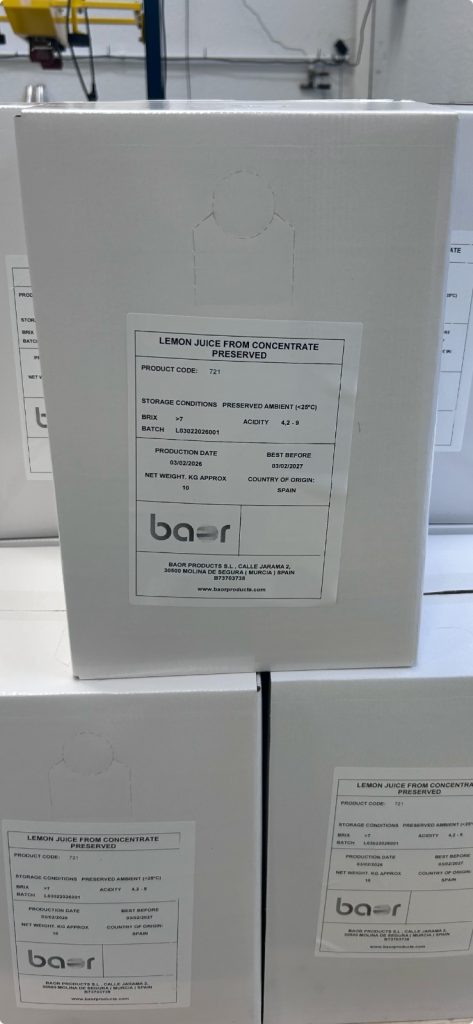
To further optimize usability and efficiency, our FC lemon juice with preservatives is packed in Bag-in-Box format, specifically designed to facilitate handling, dosing, and storage for small and medium professional users such as foodservice operators, central kitchens, and artisanal producers. This format helps reduce waste after opening and improves operational convenience.
Combined with a controlled and standardized specification, this solution offers one of the best quality–price ratios on the market for professional applications requiring reliability, consistency, and year-round availability.

Sorry, the comment form is closed at this time.