




05 Abr Impact of the Iran Conflict on Fruit Concentrate Markets: Prices and Availability
The war in Iran (which began in March 2026) is already having a visible impact on the global food industry.
Not because it directly affects fruit production, but because it is putting pressure on the foundations of the entire supply chain: energy, logistics, and agricultural inputs.
One key factor is the disruption around the Strait of Hormuz, a critical trade route.
When this corridor slows down, the effect is immediate: higher costs, tighter supply, and less predictability across multiple industries—including fruit concentrates..
What is actually happening in the market?
The situation is not driven by a single issue, but by several connected pressures happening at the same time:
Rising fertilizer costs
The Persian Gulf is a major supplier of urea, ammonia, and phosphates.
With maritime trade disrupted, fertilizer availability has tightened, pushing prices up by an estimated 35–40%.
For agriculture, this creates a chain reaction:
Higher input costs for farmers
Reduced fertilizer usage in some regions
Pressure on yields over time
Even in key fruit-producing countries like Brazil or Argentina, this directly impacts the cost and availability of raw materials.
Higher energy costs (diesel and gas)
The conflict has also driven up oil and fuel prices.
In practical terms, this affects:
Transportation of raw materials
Operation of agricultural machinery
Irrigation systems
Industrial processing
For fruit concentrates—where processes like evaporation and pasteurization are energy-intensive—this translates quickly into higher production costs per ton.
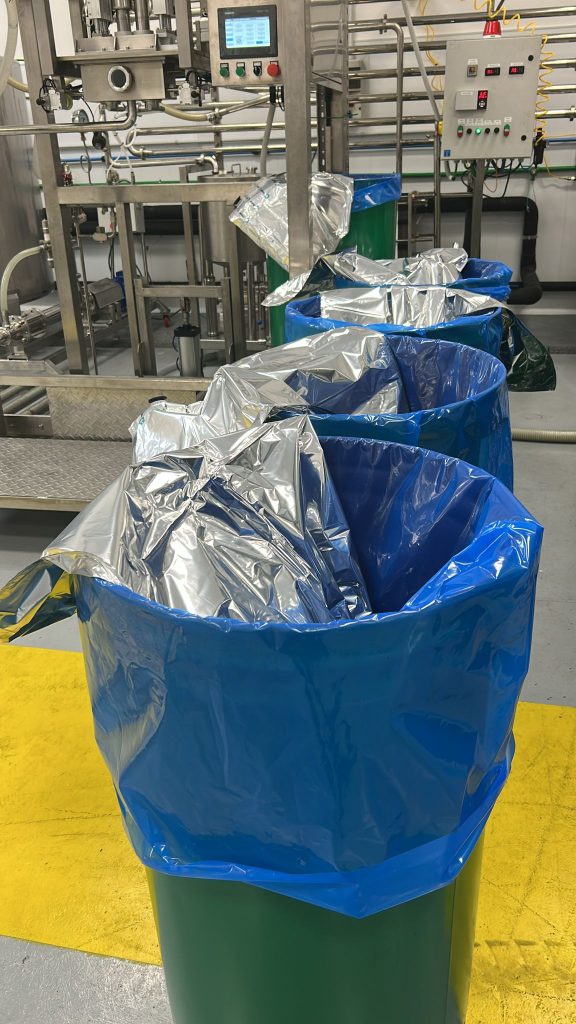
Logistics and packaging under pressure
The situation has also created a kind of logistical “short circuit”.
Shipping routes are less stable, transit times are increasing, and costs are rising.
At the same time, reduced availability of petrochemical inputs (such as naphtha) is affecting plastic production.
This has a direct impact on:
Packaging materials
Aseptic formats
Availability of certain industrial containers
Pressure on grains and animal feed
Uncertainty around global trade flows is also affecting commodities such as grains and feed.
While this may seem unrelated to fruit concentrates, it contributes to a broader effect:
Increased overall food system costs
Pressure on agricultural profitability
More volatility across raw material markets
A growing concern around food security
Organizations such as the Food and Agriculture Organization (FAO) have already warned that prolonged disruption could push millions of people into food insecurity.
This is not an immediate effect everywhere, but it highlights how sensitive the global food system has become to geopolitical events
What does this mean for fruit concentrates?
Even though the conflict is not directly linked to fruit production, the impact is clear:
Higher costs at origin (energy + agriculture)
More complex and less reliable logistics
Increased price volatility
Greater need for forward planning
In short, concentrates are becoming a more exposed and less predictable category.
We must consider that there are countries that need to import raw materials and finished products to supply their populations due to domestic production deficits. We are facing a situation where not only the price of raw materials matters, but also ensuring product availability for manufacturing.

Sorry, the comment form is closed at this time.