




25 Abr Pomegranate Varieties: How Raw Material Selection Defines Juice & Concentrate Quality
Pomegranate is one of the most complex —and often misunderstood— raw materials in the juice and concentrate industry. Not all pomegranates are the same, and choosing the wrong variety can directly impact color, flavor, yield, and even the stability of the final product.
In this article, we break down the main pomegranate varieties used in industrial processing and explain how they influence the quality of NFC juice and concentrates.
Why Pomegranate Variety Matters in Industrial Processing
From a B2B perspective, the variety directly affects:
Natural °Brix
Acidity (pH)
Color (anthocyanin content)
Extraction yield
Thermal stability during pasteurization
Sensory profile (sweet vs sour vs astringent)
In short: the variety determines whether your product is premium… or problematic.
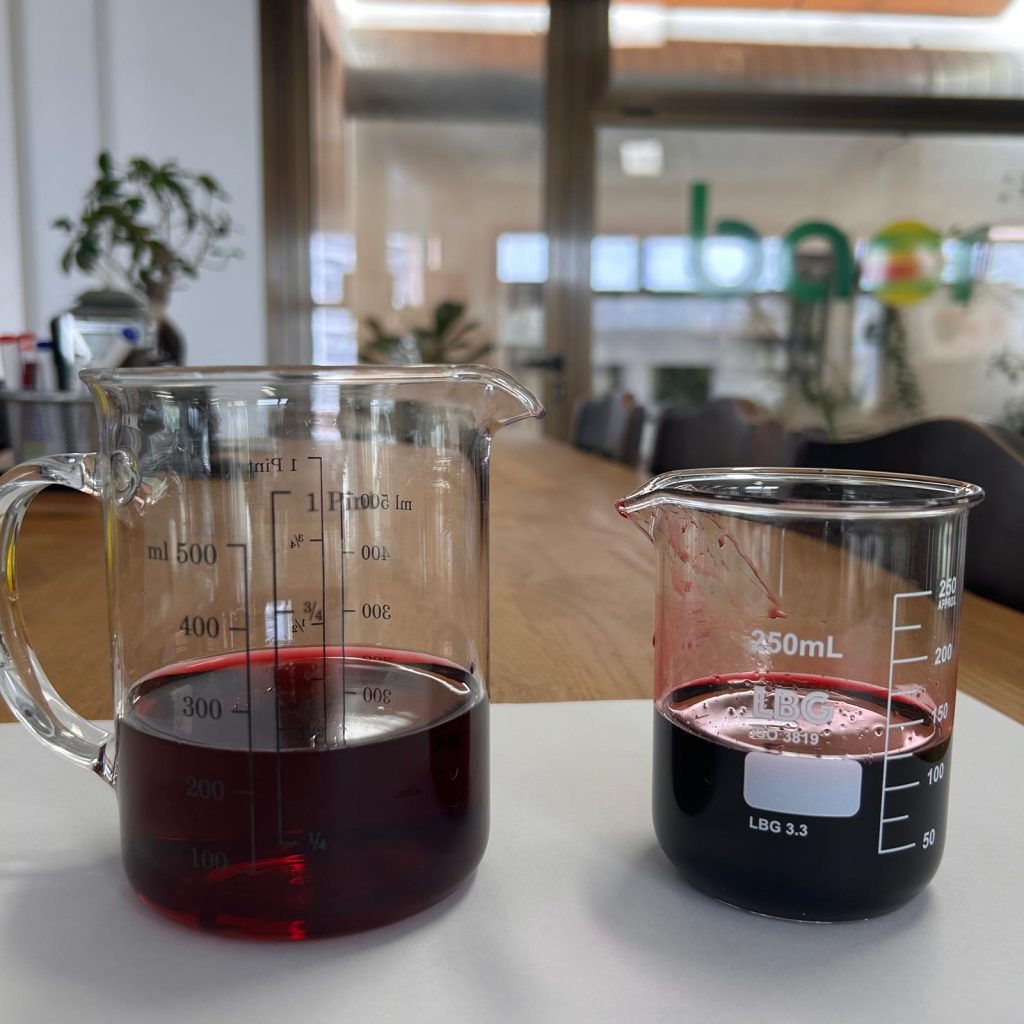
Main Pomegranate Varieties for Juice & Concentrate Production
Wonderful (Global Industrial Standard)
The most widely used industrial variety, especially in Spain, the U.S., and Israel.
Key characteristics:
Deep red color
High anthocyanin content
Balanced sweet-tart profile
Strong industrial yield
Best applications:
Premium NFC juice
High-quality concentrates
Functional beverage bases
✔ Ideal when you need strong color + internationally accepted profile
Mollar de Elche (Spain)
A traditional Spanish variety, highly appreciated for fresh consumption but more limited for industrial use.
Key characteristics:
Lighter color
Low acidity
Very sweet taste
Lower color intensity
Best applications:
Blends
Products requiring mild flavor
Not ideal as a standalone base for concentrates if strong color is required.
Hicaz (Turkey)
A key industrial export variety.
Key characteristics:
Very dark color
High acidity
More astringent profile
Excellent stability
Best applications:
High-intensity concentrates
Color correction in blends
Applications where visual impact is critical
✔ Particularly useful to boost color in formulations
Acco / Early Varieties
Early-season varieties that extend processing campaigns.
Key characteristics:
Lighter color
Lower phenolic content
Softer flavor
Best applications:
Early production runs
Blending with stronger varieties
⚠️ Lower suitability for premium products if used alone.
Key Industrial Insight: Blending Is Essential
n real industrial production, working with a single variety is rare.
The key is strategic pomegranate blending:
Each variety have differente characteristic, and mixture of different varieties in different percentaje,, make have the perfect quality banance
Wonderful → structural base
Hicaz → color enhancement
Mollar → sweetness adjustment
👉This allows you to standardize:
Color
°Brix
Acidity
Sensory profile
And most importantly, ensures batch-to-batch consistency. In pomegranate concentrates, variety selection directly affects:
Final color intensity (critical in markets like South Korea)
Need for corrections (citric acid, natural flavors, etc.)
Thermal degradation of anthocyanins
Perceived product quality
| Application | Key Requirement | Recommended Variety |
|---|
| Jelly sticks | Color + stability | Wonderful + Hicaz |
| Functional beverages | Balance + clean profile | Wonderful |
| Industrial concentrates | Yield + consistency | Blends |
| Premium products | Sensory quality | Selected Wonderful |
In the pomegranate juice and concentrate industry, the difference between a standard product and a high-quality one is not the process… it’s the raw material.
Choosing the right variety —and knowing how to blend it— is what truly defines the final product.
At Baor Products, we carefully select and combine pomegranate varieties to deliver consistent, high-quality juice and concentrate solutions tailored to each industrial application.

Sorry, the comment form is closed at this time.