



Síguenos en Redes Sociales


Prebiotics in Functional Beverages: Definitions, Formulation Challenges and Fruit-Based Solutions

Prebiotics in Functional Beverages: Definitions, Formulation Challenges and Fruit-Based Solutions

Prebiotic or probiotic?

The functional beverage market is moving beyond vitamins, minerals and sugar reduction.Consumers increasingly associate beverages with digestive wellness, daily nutrition and added functionality. This is creating new opportunities for manufacturers, but also considerable technical and regulatory challenges.Adding fibre is relatively simple. Developing a beverage that is effective, stable, enjoyable and commercially scalable is a much more complex task.

What is a prebiotic?

The International Scientific Association for Probiotics and Prebiotics defines a prebiotic as:

“A substrate that is selectively utilised by host microorganisms conferring a health benefit.”

This definition contains two essential requirements:

1.The ingredient must be selectively used by microorganisms in the host.

2.This utilisation must provide a demonstrated health benefit.

Therefore, not every dietary fibre is automatically a prebiotic.

Dietary fibre is a broad nutritional category. A prebiotic must have sufficient scientific evidence supporting its selective microbial utilisation and associated benefit.

Frequently studied prebiotic ingredients include:

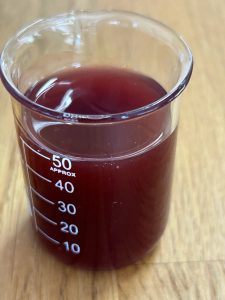
Inulinorganic aronia vinegar with mother dark red color in laboratory glass beaker
Fructooligosaccharides — FOS

Galactooligosaccharides — GOS

Certain resistant starches

Specific non-digestible oligosaccharides

The effects, recommended quantities and technological behaviour depend on the particular ingredient.

Prebiotics are not probiotics

Although the terms are sometimes confused, they describe different concepts.

Prebiotics are substrates used by microorganisms and do not need to contain live bacteria.

Probiotics are live microorganisms that must remain viable in an adequate quantity until consumption.

Synbiotics combine live microorganisms with a substrate designed to be utilised by microorganisms.

From a beverage manufacturing perspective, prebiotics can be easier to incorporate than probiotics because they do not require the survival of live microorganisms throughout processing, storage and distribution.

However, they still present challenges involving solubility, viscosity, stability, sensory profile and digestive tolerance.

Are fruit concentrates naturally prebiotic?

Fruit concentrates should not automatically be described as prebiotic.

Fruits contain different carbohydrates, fibres and polyphenols, but the concentration process, clarification and filtration can considerably modify their composition. A clear juice concentrate, for example, will normally contain substantially less fibre than a fruit purée or a cloudy fruit preparation.

Specific fruit components may interact with the intestinal microbiota, but this does not mean that every fruit concentrate satisfies the scientific definition of a prebiotic or can legally carry a prebiotic claim.

The strongest role of fruit in this category is as a natural and attractive formulation platform for an added, properly selected prebiotic ingredient.

Why combine fruit and prebiotic fibre?

Prebiotic fibres can create flavour, texture and formulation challenges. Depending on the ingredient and dosage, they may affect:

Sweetness

Mouthfeel

Viscosity

Solubility

Sedimentation

Acidity perception

Final °Brix

Digestive tolerance

Fruit ingredients can help build a more complete product around the functional component.

They provide flavour identity, colour, acidity, natural soluble solids and a familiar consumer proposition. They can also help balance the sensory characteristics of certain functional fibres.

The objective is not simply to add fibre. It is to create a beverage in which functionality, flavour, stability and industrial feasibility work together.

Fruit-based prebiotic beverage concepts

Several combinations can be developed depending on the target market and required positioning:

Apple + Apple Cider Vinegar + Prebiotic Fibre

A modern formulation combining apple flavour, controlled acidity and selected prebiotic fibre.

Apple cider vinegar contributes acidity and sensory character. It should not, by itself, be presented as the source of the prebiotic function unless sufficient evidence supports that specific claim.

Lemon + Prebiotic Fibre

A refreshing base suitable for still or carbonated beverages. Lemon acidity can support a clean flavour profile, although the interaction between low pH, fibre stability and processing conditions must be evaluated.

Pomegranate + Prebiotic Fibre

A distinctive premium concept combining pomegranate colour and flavour with an added functional fibre. Sweetness and acidity may need to be adjusted to obtain a balanced final beverage.

Berry + Prebiotic Fibre

Strawberry, raspberry, blueberry or blackcurrant can provide strong flavour and colour, helping create functional drinks with a more indulgent sensory profile.

Functional Fruit Soda

A carbonated fruit drink incorporating fibre while maintaining refreshment, flavour and drinkability. Carbonation, viscosity and foam behaviour must be considered during development.

What can BAOR Products contribute?

BAOR works with beverage manufacturers to develop fruit-based solutions for industrial applications.

Our portfolio includes fruit jucie concentrates with differents recipe that can add prebiotic substances line vinegars with the mother, inulin  or FOS

BAOR can develop customised fruit bases designed to incorporate a selected prebiotic fibre supplied or approved for the customer’s project.

The result is not simply a fruit concentrate with an additional ingredient. It is a complete formulation base designed around the intended beverage and manufacturing process.

Regulatory considerations

In the European Union, nutrition and health claims are regulated by Regulation (EC) No 1924/2006. The use of terms such as “prebiotic” and any accompanying digestive or microbiota-related message must be evaluated carefully for the intended market, ingredient, dose and final product.

Authorised wording applies only when the specific conditions of use are met.

One example is native chicory inulin. European legislation permits the claim that chicory inulin contributes to normal bowel function by increasing stool frequency when the food provides a daily intake of at least 12 grams of qualifying native chicory inulin.

This does not authorise general digestive-health claims for every type or quantity of fibre.

Consequently, regulatory assessment should form part of product development from the beginning rather than being considered only when the label is created.

From ingredient to commercially viable beverage

The future of functional beverages will not be built by adding isolated ingredients without considering the complete product.

Successful development requires the integration of:

Fruit + functionality + sensory quality + stability + regulatory compliance + industrial scalability

This is where BAOR can support beverage manufacturers: transforming fruit concentrates, fruit bases and selected functional ingredients into commercially viable beverage concepts.

Contact BAOR Products to discuss the development of a customised fruit-based solution for your next functional beverage project.

References

No Comments

Sorry, the comment form is closed at this time.